Fixing a Burnt Outlet, Fast
A discoloured, warm or melted-looking power point has already told you what happened: something got too hot. The point now is stopping it before it happens again.
Pull the plug, leave the point alone and call (02) 9538 7139. Don't wait to see if it happens a second time.
A single burnt outlet is one of the more contained faults on this list, but only if you leave it alone and get it looked at properly. Ignoring it is where the risk really starts.
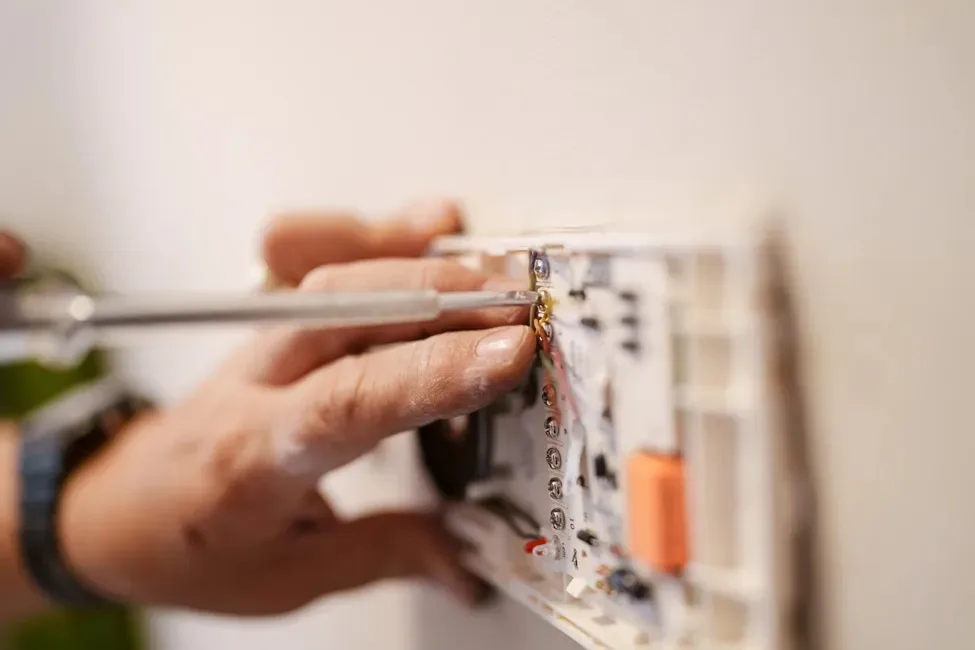
What a Burnt Outlet Actually Means
Every power point is rated for a certain current. When something pushes past that, whether a loose connection, a failing plug, or too much load, the heat generated has nowhere safe to go.
That heat scorches the plastic housing and blackens the metal contacts inside.
By the time you can see discolouration, that outlet has run hot at least once, and probably more than once.
The plastic housing on a power point is chosen for its insulating properties, not for withstanding sustained heat. Once it starts to brown or bubble, that protection is compromised for good.
Is a Burnt Outlet Dangerous?
Yes, always. A burnt or discoloured outlet is visible proof that overheating has already occurred, not a warning of something that might happen.
Stop using it immediately, and don't plug anything back in to test whether it "still works". It might, right up until it doesn't.
Call us straight away if the discolouration is spreading, if the point feels warm to touch, or if you notice any smell alongside it.
There's no version of this fault worth monitoring at home. Once you've seen it, the safest move is getting it assessed rather than waiting to see how it develops.
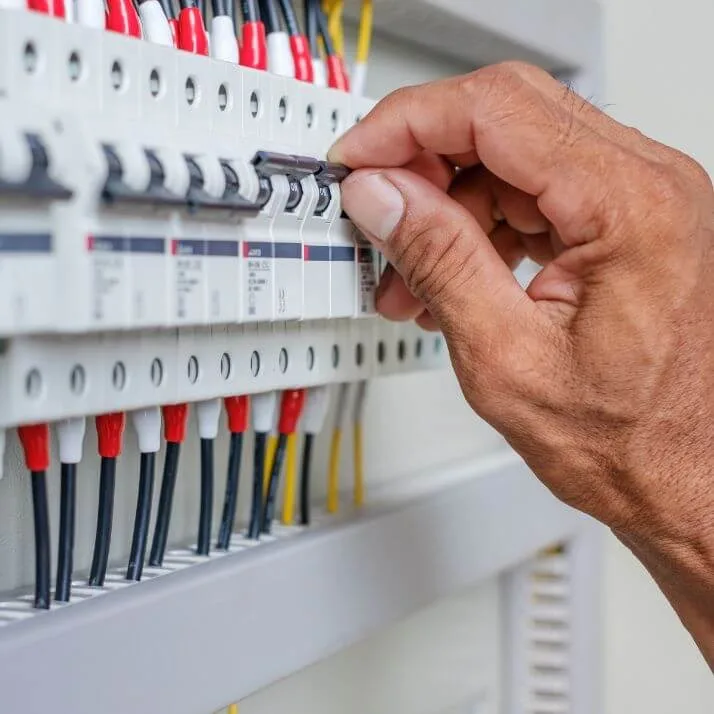
What Usually Causes It
- A loose connection inside the point. Arcs slightly under load, generating heat at the contact.
- An overloaded circuit. Too many appliances drawing through one point over time.
- A worn or damaged plug. Poor contact between plug and socket generates resistance and heat.
- Ageing wiring behind the point. Insulation breaking down increases resistance and heat.
- A bargain-bin fitting. Budget components can't handle their rated current reliably over time.
Most of these causes trace back to a connection or component that's no longer making clean, low-resistance contact. Resistance is what generates heat, so finding the poor contact point is the whole job.
Do This First
- Leave that outlet alone, even where it appears to run fine.
- Switch off the circuit at the switchboard if you're able to identify it safely.
- Don't touch the discoloured area or attempt to inspect it closely.
- Call (02) 9538 7139 and describe what you're seeing, including any smell.
How We Fix and Certify the Repair
We isolate the affected circuit first, then test the outlet and the wiring behind it with thermal imaging to find exactly where the heat originated.
A fault contained to the point itself usually means a straightforward replacement. One that extends into the wiring needs tracing further back.
We replace with quality Clipsal or Hager gear as standard, not whatever's cheapest, so the same fault doesn't return in a year.
Where the job is notifiable, we test it and issue a Certificate of Compliance through NSW Fair Trading.
You'll see the cost set down in writing before we start, plus photos of the finished repair once we pack up.
Preventing the Next Burnt Outlet
- Have outlets and circuits inspected periodically, especially in older homes with original points.
- Swap out tired or dated power points ahead of any visible heat damage showing.
- Spread high-draw appliances across circuits rather than stacking them on one socket.
- Fit RCD safety switches across the board for shock protection on top of fault detection.
- Replace damaged plugs and leads, which are a common contributor to outlet heat.
None of these are big jobs individually. Together, they're the difference between a power point that lasts decades and one that shows up on this page.
Servicing Mount Colah and Nearby Suburbs
A burnt outlet sometimes appears alongside a wider hot plastic odour through the house, or a switchboard that has started dropping out and won't reset.
If several points on the same run feel warm rather than one isolated outlet, our guide to too much load on shared sockets is worth a look too.
We're regularly in Hornsby, Waitara and Normanhurst on top of Mount Colah itself.

Get in Touch Today Before It Gets Worse
A burnt outlet won't fix itself, and using it again is a real risk. Call (02) 9538 7139 and we'll get someone out to assess and fix it properly.
Common questions
Burnt Outlet FAQs
Can I still use a power point that looks slightly discoloured?
No. Any browning, scorching or melted plastic around a power point means it's been running hot, and using it again risks making the fault worse. Stop using it and call us.
Is a burnt outlet always dangerous?
Yes, treat every burnt or discoloured outlet as a genuine fire risk. The visible damage means heat has already built up past a safe level at least once.
How much does it cost to fix a burnt outlet?
It depends on whether the fault is limited to the point itself or extends into the wiring behind it. We test first and give you a fixed written price before any work starts.
Can a burnt outlet cause a fire?
Yes. Discolouration is the visible evidence that arcing or overheating has already happened at that point, and repeated cycles of that heat are a genuine ignition risk.
Will my safety switch protect me from a burnt outlet?
Only partly. An RCD trips on current leaking to earth, which is a shock hazard, but overheating at a loose contact doesn't leak to earth, so the RCD never sees it. Scorching is a heat problem your safety switch simply isn't built to catch.
How do you track down where it went wrong?
We isolate the circuit, then run thermal imaging across the outlet and its wiring to pinpoint where the heat is building. That shows whether the point itself is at fault or something further back down the run.